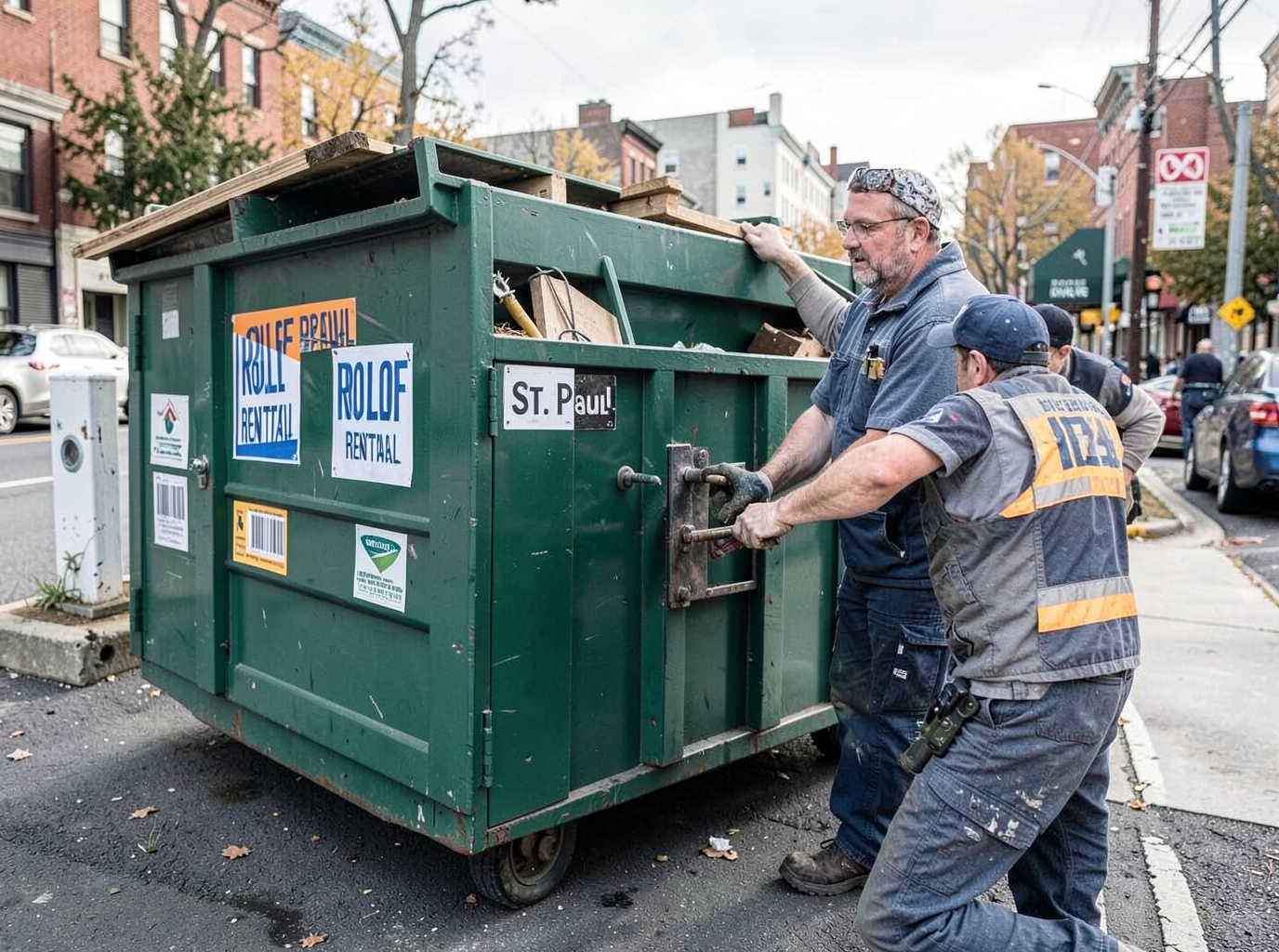
St. Paul’s older housing stock in neighborhoods like Summit Hill and Payne-Phalen often means narrow driveways and tight alley access that requires smaller 10- or 15-yard containers instead of larger units. Winter snow accumulation on streets and sidewalks can block placement spots, so drivers routinely check for cleared space and may need to coordinate with city plowing schedules before dropping a unit. Homeowners renovating Victorian-era properties frequently generate mixed loads of plaster, lath, and old lumber that must be kept separate from yard waste to avoid extra sorting fees at the landfill.
City permit rules in St. Paul require a right-of-way permit whenever a roll off sits on the street rather than a private driveway, and the process takes 24 to 48 hours in most cases. Crews placing containers near the Mississippi River bluff areas watch for soft or sloped ground that can cause tipping, so they carry plywood sheets and leveling blocks on every truck. During spring thaw, saturated soil in Lowertown lots can turn a standard drop-off into a same-day repositioning job if the unit begins to sink.
Construction sites near the State Capitol or along University Avenue commonly request weekly swaps because space is limited and material volume grows quickly. We schedule pickups around weekday rush-hour restrictions on certain arterial streets to keep traffic moving and avoid city fines passed on to the customer.
Technician insight
In St. Paul the thing that catches most people out with roll off dumpster rental is forgetting the city street permit on narrow blocks like those in Frogtown; if the unit lands on the pavement without paperwork the city tags it the next morning and we have to move it same day.
Basement cleanout on Summit Avenue
Homeowner clearing decades of stored items from a 1920s house needed a compact unit that would fit the sloped driveway. We placed a 10-yard container on plywood to protect the brick pavers, confirmed the alley was clear of snow, and returned five days later once the load was full. The container came out without damage to the historic paving and the material went straight to the county landfill.
Roll Off Dumpster Rental Services We Offer
✓Residential Cleanout Dumpster Rental
10- and 15-yard roll offs sized for attic, basement, and garage cleanouts common in St. Paul’s older single-family homes.
✓Construction Debris Roll Off
20- and 30-yard containers placed at remodel sites to handle drywall, lumber, and roofing material from projects in Ramsey County.
✓Yard Waste and Landscape Dumpster
Open-top units for leaves, branches, and sod removal during spring and fall cleanup in neighborhoods with mature tree cover.
✓Concrete and Heavy Material Rental
Low-sided roll offs rated for concrete, brick, and tile loads from driveway or patio replacements around St. Paul.
Roll Off Dumpster Rental Cost in St. Paul, MN
| Service | Typical Range | What Affects It |
|---|---|---|
| 10-yard roll off | $350–$550 | Base rate; increases with over-weight fees or extra days |
| 15-yard roll off | $450–$650 | Common for garage cleanouts; weight limit affects final cost |
| 20-yard roll off | $550–$800 | Typical construction size; street permit adds city fee |
| Concrete-only load | $400–$600 | Lower sides and higher tonnage allowance change the rate |
Ranges are typical for St. Paul, MN and confirmed with an exact written quote before any work starts.
How it works
- 1
Choose Size And Schedule
Call or request online to select the right yardage and delivery date that fits your project timeline.
- 2
Permit Check
We confirm whether a street permit is needed and handle the paperwork with the city when the unit will sit on public right-of-way.
- 3
Delivery And Placement
Driver arrives during your chosen window, sets the container on plywood or blocks for level placement, and reviews load rules.
- 4
Pickup And Disposal
Once full, we haul the unit to the approved landfill or recycling facility and provide a weight ticket on request.
Pricing
Pricing varies by container size, weight, and rental length; most residential jobs fall in the mid-range of current market rates.